
![[HERO] Incorporating Technology in the Classroom: Furniture Solutions for the Digital Age](https://cdn.marblism.com/L4nwT1MjYTl.webp)
Discover 7 practical ways to upgrade a tech-forward learning space with school furniture that supports devices, collaboration, and daily classroom flow. The right classroom furniture should reduce friction—power access, storage, movement, and ergonomics—so technology promotes learning instead of becoming another thing to manage. At School Furniture Headquarters, our Educational Design Specialists (EDS) help schools plan, specify, and implement these ideas as a cohesive system, not a patchwork of products.
1) Plan Your Power Strategy First (School Furniture That Eliminates Cord Chaos)
The shift toward 1:1 device programs—where every student receives their own tablet, laptop, or Chromebook—has fundamentally changed what educators need from their learning spaces. Devices require reliable power, stable work surfaces for both screens and paper, and layouts that facilitate fast transitions between independent work, collaboration, and whole-class instruction. Without a clear plan, even great technology can feel complicated, which is exactly why our EDS team starts with infrastructure and flow before recommending products.
Your EDS will review room dimensions, existing electrical access, typical class sizes, and daily teaching routines, then map out where power should live, how traffic should move, and which furniture formats best support the way your students actually work. That planning lens turns “buying furniture” into an intentional design process that promotes smoother lessons and fewer tech headaches.
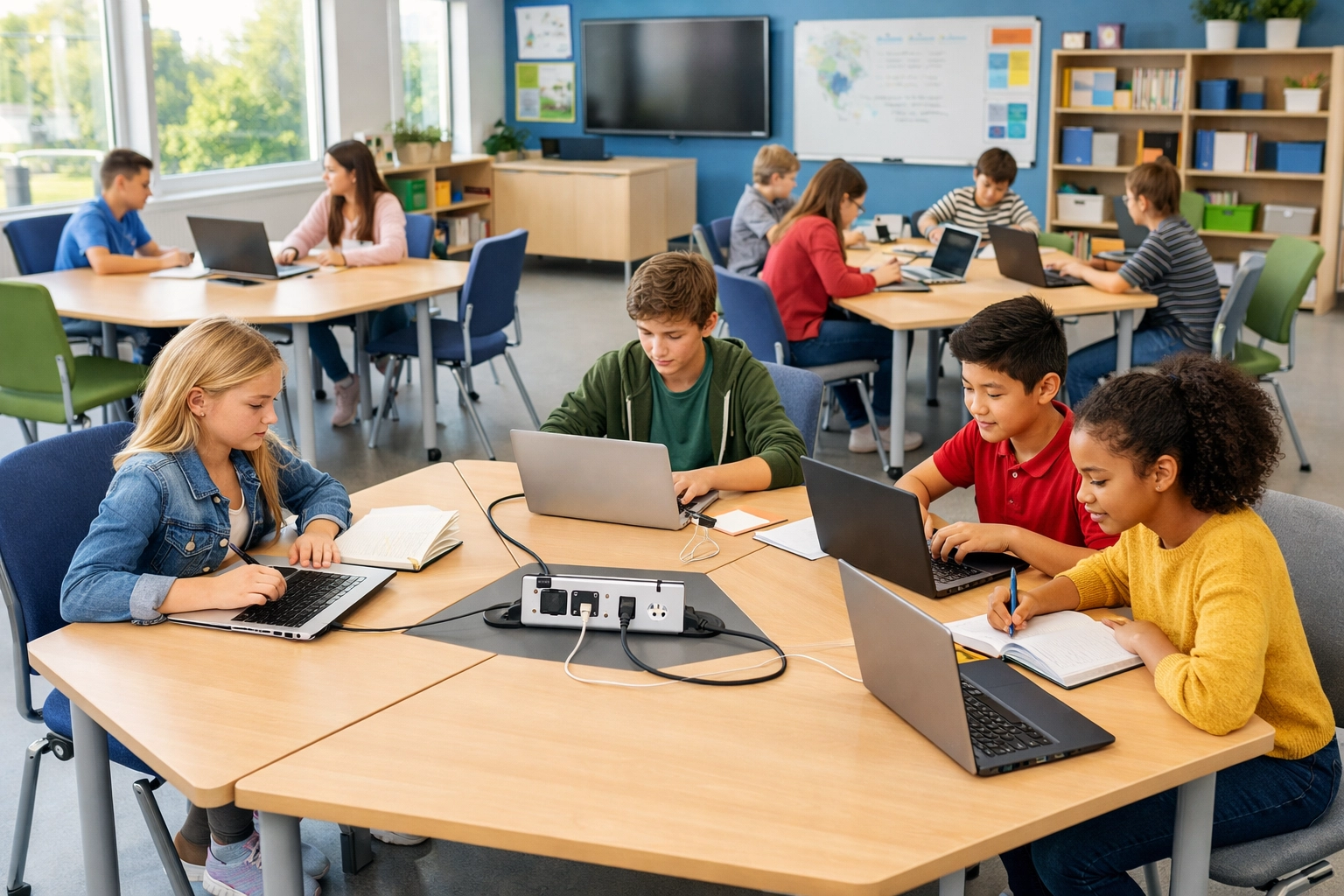
2) Choose Power-Integrated Desks and Tables (School Furniture Built for Devices)
Power-ready desks and collaborative tables with built-in outlets and USB charging keep learning moving without the maze of extension cords. Integrated cable management reduces tripping hazards and visual clutter, while keeping students focused on assignments instead of hunting for an available plug.
An EDS helps you match power-integrated surfaces to the realities of your room—placement relative to walls and floor boxes, number of devices per table, and the right mix of individual desks vs. team tables—so your investment supports both safety and daily usability.
3) Add Mobile Charging Carts and Secure Storage (Classroom Furniture That Protects Tech)
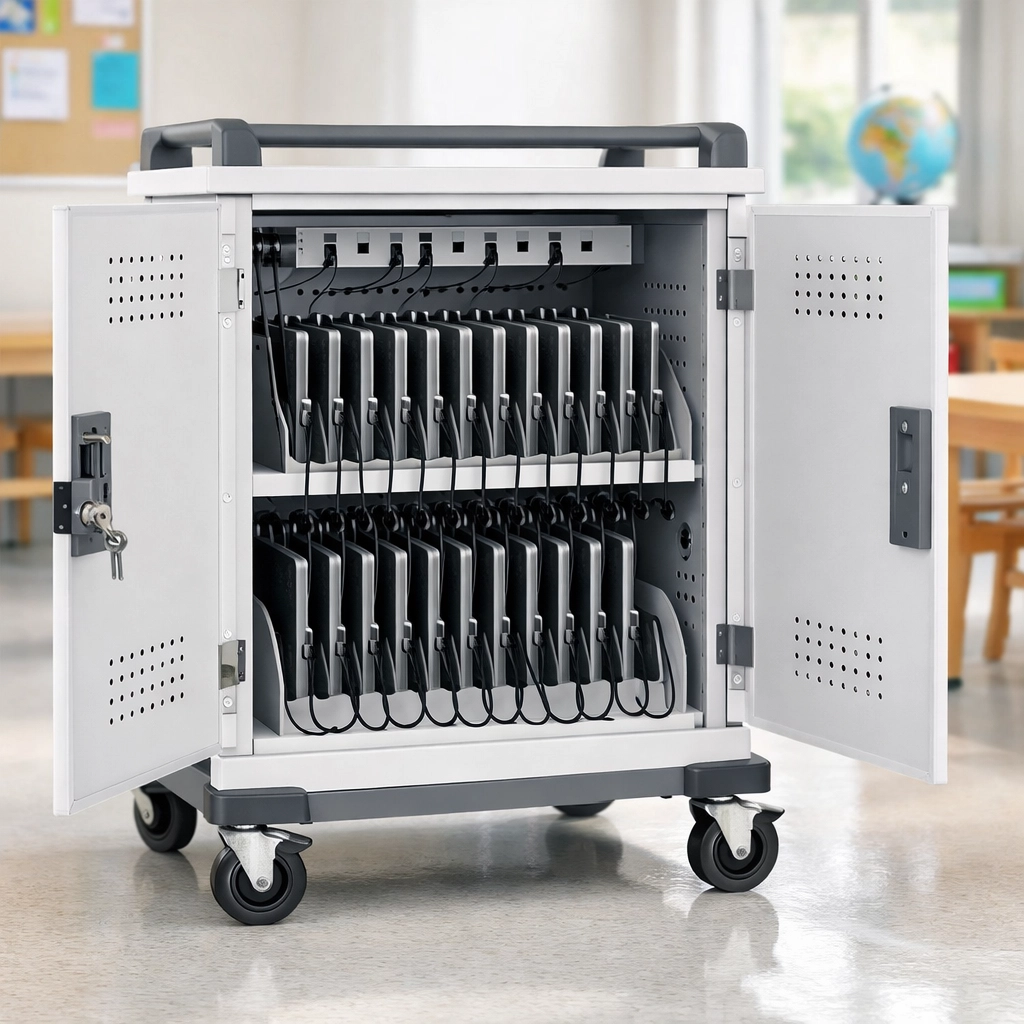
Mobile charging carts do double duty: they charge devices overnight and keep them secure during the day. Look for individual compartments, ventilation to prevent overheating, organized cord routing, and lockable doors that support responsible device management.
Our EDS team helps you figure out the best way to manage your tech. Whether devices stay in one room or move between classrooms in mobile carts, we’ll help you design a storage and charging setup that actually works for your team—making the daily routine of grabbing and returning gear totally stress-free.
4) Lean into Flexible Classroom Seating for Collaboration and Screen Sharing
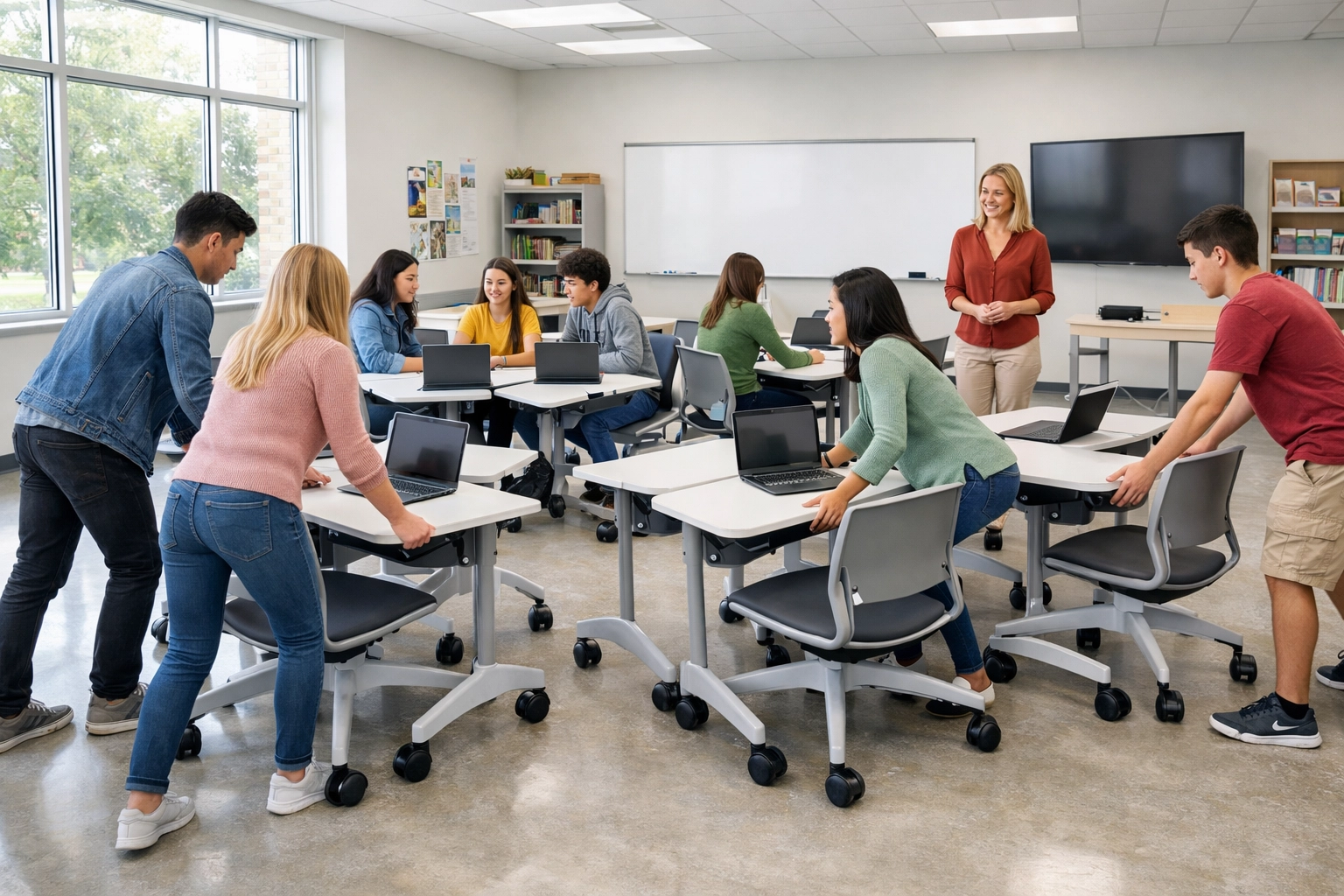
Flexible classroom seating makes it easy to shift from focused device work to group problem-solving in minutes. Mobile desks on casters, lightweight collaboration tables, and modular setups help students reconfigure the room to match the lesson—without disrupting momentum.
Our EDS team helps you choose flexible classroom seating that fits your teaching style and the age group you serve, balancing movement with structure so the room stays energizing, not chaotic.
5) Use Mobile, Reconfigurable Collaboration Stations (School Furniture That Supports Project-Based Learning)
In modern tech classrooms, students regularly co-create slide decks, videos, and digital prototypes, which is easier when tables can cluster quickly and surfaces comfortably hold devices plus notebooks, manipulatives, and materials. Reconfigurable collaboration stations (tables, makerspace workbenches, and modular pods) promote better group roles and faster setup.
An EDS will help you right-size collaboration zones—how many stations you need, the ideal table shapes, and where they should sit in the room—so teamwork feels intentional and teachers can supervise at a glance.
6) Prioritize Ergonomics and Height-Adjustable Options (Classroom Furniture That Promotes Comfort)
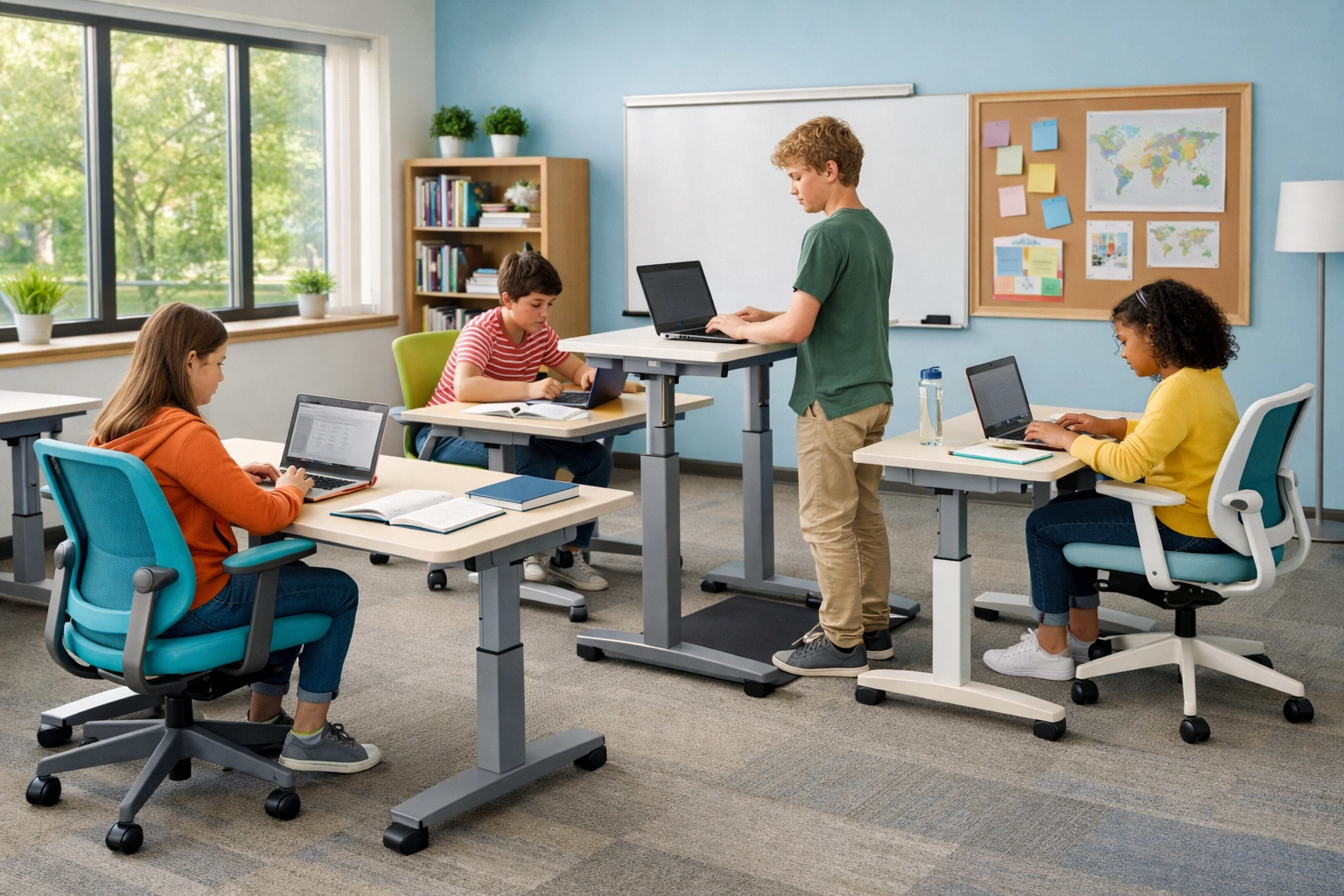
Extended device use can add strain if furniture doesn’t support posture and movement. Height-adjustable desks and ergonomic seating encourage healthier positioning, while allowing students to alternate between seated and standing work during longer tasks.
Your EDS can recommend ergonomic packages that match student age ranges and classroom schedules, helping you select options that promote comfort without overcomplicating procurement.
7) Build in Teacher Command + Visibility (School Furniture That Keeps Instruction Flowing)
Tech-rich rooms work best when teachers can circulate, see screens when needed, and transition between mini-lessons and small groups without bottlenecks. Thoughtful teacher stations, clear sightlines, and furniture placement that preserves open pathways can make the difference between “busy” and “effective.”
Our EDS team plans layouts that support supervision and movement—so teachers can facilitate, troubleshoot, and coach in real time—while keeping the room flexible for whatever the day brings.
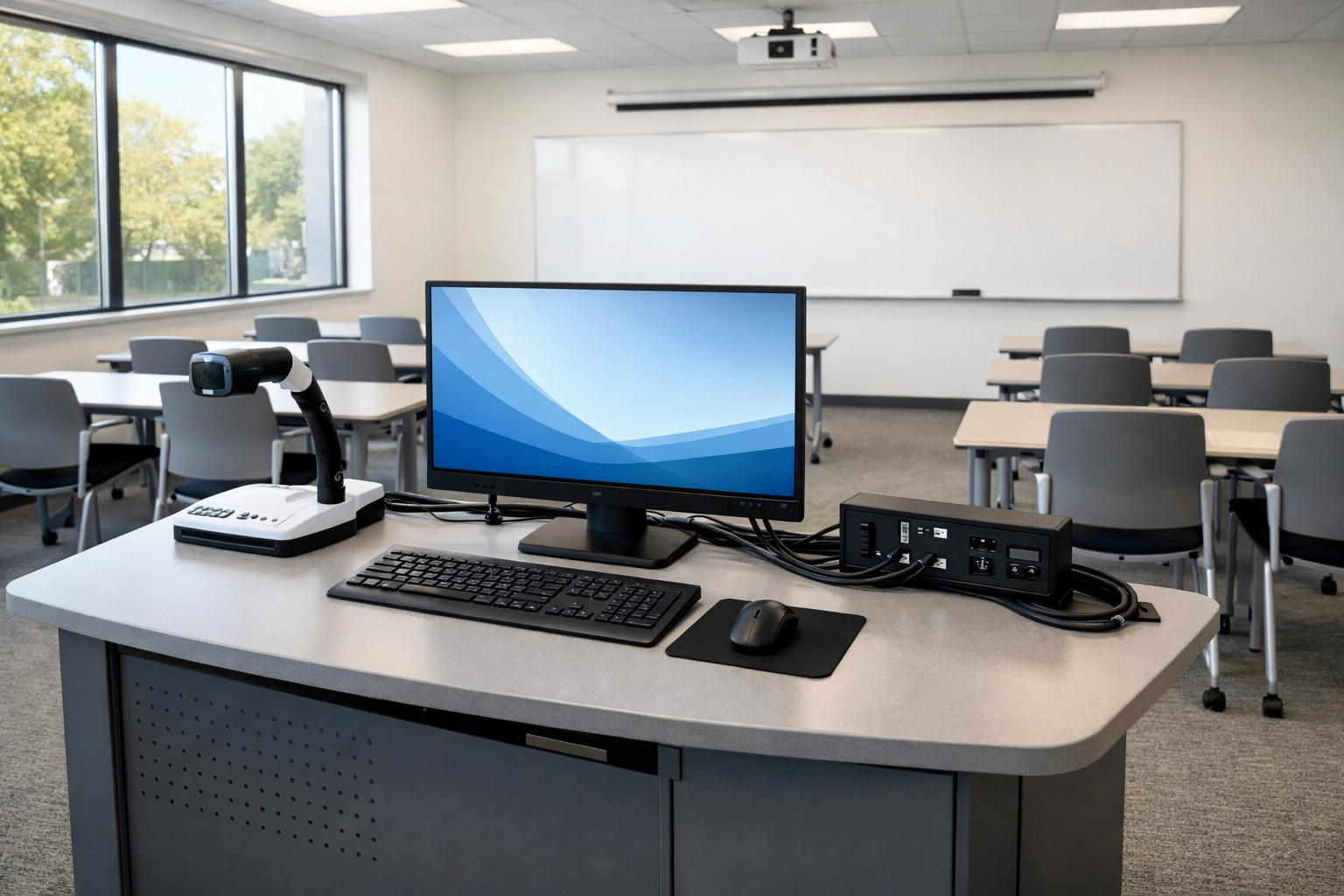
Strategic Planning: Beyond Buying “Stuff”
The difference between a classroom filled with expensive equipment and a truly effective learning environment often comes down to strategic planning. Schools face a common challenge: well-intentioned technology purchases that don’t integrate cohesively, creating frustration rather than facilitating learning.
This is where specialized expertise becomes invaluable. At School Furniture Headquarters, our Educational Design Specialists (EDS) work directly with schools to implement these seven ideas in a way that feels cohesive and practical, not piecemeal. Rather than simply selecting individual products, our EDS team looks at how school furniture, technology, and instruction intersect in your specific rooms, then guides decisions around power access, storage, circulation paths, and flexible layouts.
An EDS considers factors like room dimensions, existing electrical infrastructure, typical class sizes, instructional approaches, and budget constraints. They build a plan where power-integrated tables sit where they’ll actually get used, where classroom furniture can shift quickly between learning modes, and where storage supports how devices are distributed and secured.
This consultative approach transforms technology integration from a product purchase into a system design. Schools avoid common pitfalls like insufficient power access, furniture configurations that look great in catalogs but struggle in daily use, or mismatched components that don’t work together when the room is full and the lesson is moving fast.
Durability and Safety: The Foundation of Long-Term Success
Technology-integrated school furniture faces demanding conditions. Students interact with these pieces constantly, moving them frequently and connecting/disconnecting devices multiple times daily. The significance of durability becomes apparent when furniture breaks down mid-semester, disrupting learning and requiring costly replacements.
School Furniture Headquarters maintains rigorous supplier selection standards specifically to ensure technology-enhanced furniture withstands educational environments. Suppliers undergo evaluation for construction quality, material durability, safety certifications, and track records in educational settings. Power integration components meet strict electrical safety standards, while structural elements demonstrate resistance to the wear patterns typical in active classrooms.
This careful vetting protects schools’ investments while ensuring student safety. Furniture with integrated electrical components requires particular attention: connections must remain secure despite frequent movement, materials must resist damage from typical student use, and designs must prevent exposure to electrical hazards.
Benefits That Extend Beyond Technology Access
When classroom furniture properly supports digital learning tools, the benefits cascade throughout the educational experience. Students engage more deeply with collaborative classroom furniture that facilitates easy screen sharing and group problem-solving. Teachers spend less time managing logistics and more time guiding learning. Technology becomes a natural tool that enhances lessons rather than a complicated add-on that disrupts flow.
Ergonomic considerations built into modern school furniture promote physical comfort during extended technology use. Adjustable heights, proper screen positioning supports, and surfaces designed for both digital and analog work reduce physical strain while supporting varied learning postures. Students remain focused on academic content rather than physical discomfort.
The flexibility inherent in well-designed technology furniture also supports diverse learning needs. Students requiring different workspace configurations, those who benefit from movement, and learners who work best in varied positions all find support within thoughtfully planned classroom environments. This inclusive approach ensures technology enhances learning for all students rather than creating new barriers.
Creating Your Tech-Ready Learning Environment
The journey toward effective classroom technology integration begins with recognizing that furniture isn’t merely a backdrop for learning: it’s an active component that either enables or constrains educational possibilities. As schools continue investing in digital tools and 1:1 device programs, the physical environment must evolve to match these technological capabilities.
Successful integration balances immediate needs with long-term flexibility. Today’s solution should accommodate current devices while remaining adaptable as technology continues evolving. Furniture investments should support pedagogical goals, facilitate the specific teaching and learning activities educators value most, and create environments where technology serves education rather than dominating it.
At School Furniture Headquarters, we’re committed to helping schools navigate these complex decisions. Our Educational Design Specialists bring expertise in creating cohesive systems where collaborative classroom furniture, power infrastructure, and flexible classroom seating work together seamlessly. Let’s explore how strategic furniture solutions can transform technology from a logistical challenge into a powerful educational advantage for your school.
Ready to create learning spaces where technology and furniture work in harmony? Visit School Furniture Headquarters to connect with our Educational Design Specialists and discover furniture solutions designed specifically for the digital age classroom.