
![[HERO] Why Ergonomic Classroom Furniture is the Secret to Student Focus](https://cdn.marblism.com/rFqg8zYlPzr.webp)
Caption: Ergonomic Classroom Furniture in action—modern school furniture and classroom furniture with student desks, classroom chairs (student chairs), and flexible classroom seating that supports daily focus.
Ergonomic Classroom Furniture is one of the most practical ways school furniture and classroom furniture can improve focus, comfort, and day-to-day learning performance. When Ergonomic Classroom Furniture is selected with intention—pairing student desks, classroom chairs / student chairs, flexible classroom seating, and collaborative classroom furniture—distraction drops and routines run smoother for both students and staff.
Table of Contents
- Key Takeaways
- 1. Correcting Posture with Ergonomic Student Desks
- 2. Reducing “The Wiggle Factor” with Flexible Classroom Seating
- 3. Ensuring Support with Contoured Classroom Chairs
- 4. Boosting Circulation through Active Sitting
- 5. Minimizing Fatigue with Targeted School Furniture
- 6. Enhancing Interaction with Collaborative Classroom Furniture
- 7. Leveraging Expert Guidance from an EDS
- Frequently Asked Questions
- Conclusion
Key Takeaways: Ergonomic Classroom Furniture and Student Focus
- Ergonomic Classroom Furniture reduces distractions by improving posture, comfort, and circulation, which supports longer time-on-task.
- School furniture that fits the student (especially student desks and classroom chairs) helps prevent slouching, fidgeting, and early fatigue.
- Flexible classroom seating supports self-regulation, giving students productive movement options without disrupting instruction.
- Collaborative classroom furniture improves interaction by making group work transitions smoother and participation more natural.
- School Furniture Headquarters and our EDS team help you plan smarter, aligning classroom furniture choices with instruction, space constraints, and long-term durability.
Meta description prompt: Ergonomics in education: explore 7 powerful ways Ergonomic Classroom Furniture and school furniture improve focus, from ergonomic student desks and supportive classroom chairs (student chairs) to flexible classroom seating, collaborative classroom furniture, and guidance from an Educational Design Specialist (EDS).
Further reading (high-authority resources):
- Edutopia on flexible learning spaces and student engagement: https://www.edutopia.org/
- University of Iowa Environmental Health & Safety ergonomics resources: https://ehs.uiowa.edu/
- Harvard Graduate School of Education (learning design insights): https://www.gse.harvard.edu/
1. Correcting Posture with Ergonomic Student Desks (Classroom Furniture)
Ergonomic student desks are one of the most direct classroom furniture upgrades for focus because posture is foundational to attention. When desk height, legroom, and work-surface depth match the student, shoulders can drop, wrists align more naturally for writing and devices, and slouching becomes less tempting—so students stay comfortable longer and attention holds steadier.
To promote better posture with student desks, prioritize:
- Proper height and clearance: feet supported, knees and hips comfortably aligned, and thighs not jammed under the surface
- Reach-friendly work zones: enough space for a notebook and device without awkward stretching that pulls students out of task
- Adjustability for growth: a practical school furniture choice when grade bands shift or students grow quickly mid-year
From an ergonomics standpoint, this “fit” factor is the quiet win of Ergonomic Classroom Furniture: less physical strain means fewer micro-distractions, and that creates a stronger baseline for learning.
A few concrete examples schools often notice after upgrading student desks as part of their Ergonomic Classroom Furniture plan:
- Less “desk drift” during instruction: students stop sliding forward, twisting sideways, or leaning heavily on one elbow to get comfortable
- Cleaner workspace habits: when the surface fits paper + device workflows, materials stay organized and students stay on task longer
- Better stamina for testing and writing: comfort adds up during longer blocks, which supports persistence and work completion
2. Reducing “The Wiggle Factor” with Flexible Classroom Seating (School Furniture)
Students aren’t designed to sit perfectly still, and a rigid setup can unintentionally turn movement into a distraction. Flexible classroom seating is a school furniture strategy that channels motion in productive, classroom-friendly ways—think subtle rocking, perching, swiveling, or shifting—so students can self-regulate without derailing instruction.
In practice, flexible classroom seating can:
- Reduce constant resets: less chair scraping, fewer full-body repositioning moments, and fewer “I can’t get comfortable” interruptions
- Support attention cycles: micro-movement helps students reset during longer lessons, which can promote longer time-on-task
- Accommodate learning preferences: options for different sensory and focus needs without spotlighting any one student
As classroom furniture goes, this is one of the most noticeable upgrades because it often changes the sound and rhythm of the room—calmer transitions, fewer disruptions, and more sustained engagement.
A few specific “day-to-day” wins schools see when flexible classroom seating is part of an Ergonomic Classroom Furniture approach:
- Smoother small-group rotations: students can move quickly without dragging heavy classroom chairs across the floor
- Fewer off-task requests: less “Can I stand?” or “My chair is uncomfortable,” especially during longer independent work
- Better support for varied learners: movement-friendly seating can help students stay engaged without pulling attention from instruction
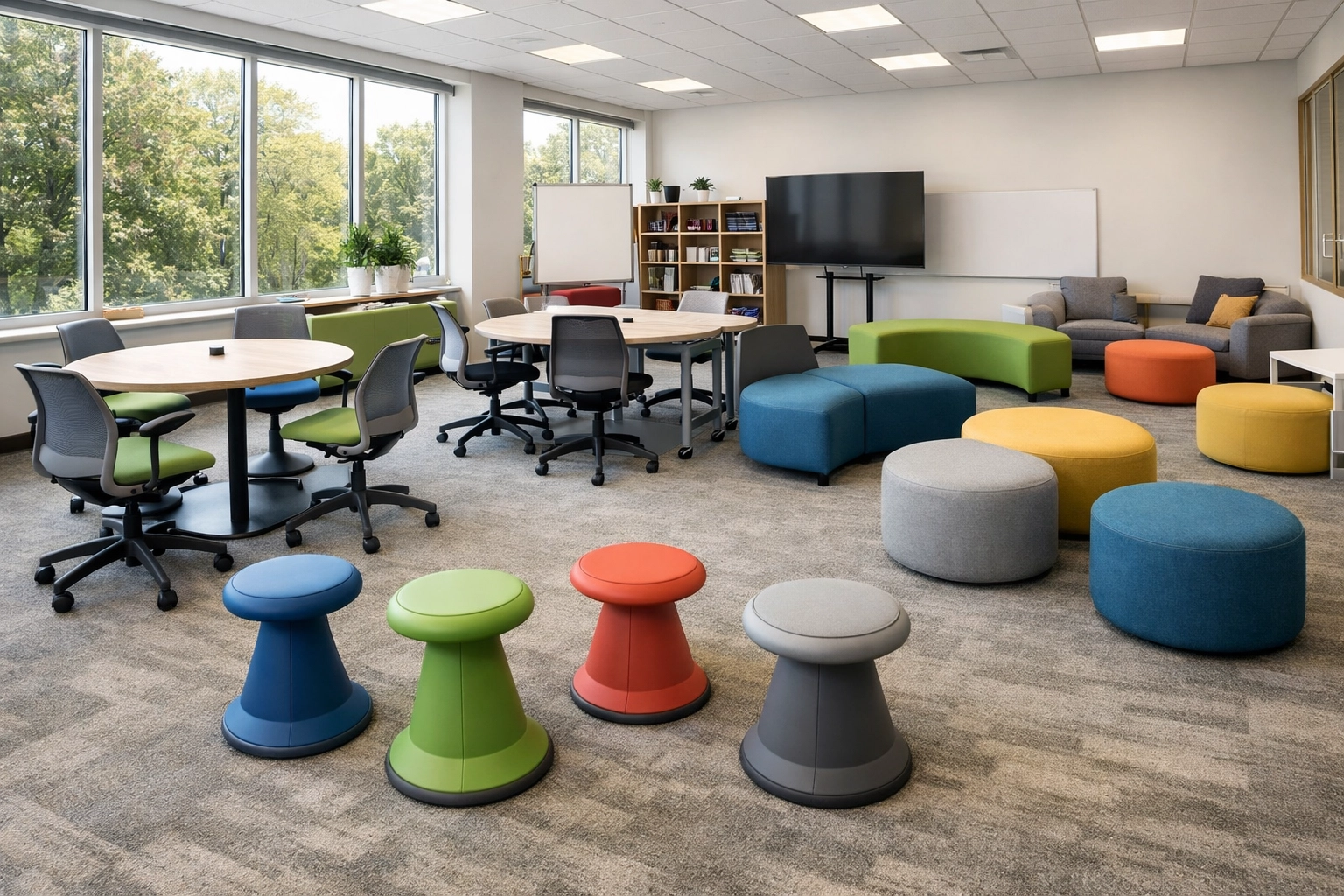
Caption: Flexible classroom seating and student desks in an Ergonomic Classroom Furniture plan—movement-friendly classroom furniture that supports self-regulation and keeps students engaged.
3. Ensuring Support with Contoured Classroom Chairs (Student Chairs) (Ergonomic Classroom Furniture)
Classroom chairs (student chairs) do the hardest, most consistent work in the room, and “flat and hard” tends to lead to slumping, fidgeting, and early fatigue. Contoured classroom chairs are a core piece of Ergonomic Classroom Furniture because they support the spine’s natural shape and reduce the effort students spend just trying to sit comfortably.
When evaluating classroom chairs, focus on features that promote attention:
- Back support that fits real posture: a contoured back that supports the natural spinal curve instead of encouraging a rounded slump
- Stable, comfortable seat design: a shape that supports without creating pressure points that trigger constant shifting
- Built-for-school durability: materials and construction that stay supportive over time (because sagging seats and wobbly frames quickly become distractions)
Well-chosen classroom furniture sends a clear message: comfort and focus are priorities here, and the learning environment was designed on purpose.
To add practical depth, many schools treat classroom chairs as the “non-negotiable” anchor of Ergonomic Classroom Furniture because students use them in almost every subject. When classroom chairs provide consistent support, teachers often report:
- Less fidgeting during direct instruction
- Stronger participation because students aren’t preoccupied with discomfort
- More consistent posture for writing, reading, and device-based work
4. Boosting Circulation through Active Sitting (Ergonomic Classroom Furniture)
Active sitting isn’t about bouncing off the walls; it’s about keeping the body engaged just enough to support circulation and alertness. Ergonomic classroom furniture that allows micro-movement can reduce that “stiff” feeling students get after sitting too long, and that physical comfort often shows up as better mental clarity.
When circulation and comfort improve, students are more likely to:
- Stay alert in independent work: fewer posture breakdowns that lead to drifting attention
- Sustain fine-motor control: steadier handwriting and tool use because students aren’t fighting discomfort
- Participate longer: less of the mid-lesson “shutdown” that comes from physical fatigue
From a classroom furniture planning perspective, pairing classroom chairs with a few active-sitting options is a measured, practical move: it promotes energy and self-regulation without sacrificing structure.
A helpful way to think about it: Ergonomic Classroom Furniture supports productive comfort. Instead of students “checking out” physically, active sitting can help them stay present during:
- Long reading blocks where posture typically collapses
- Computer-based assignments where static seating can create stiffness
- Stations and rotations where students repeatedly sit, stand, and re-sit
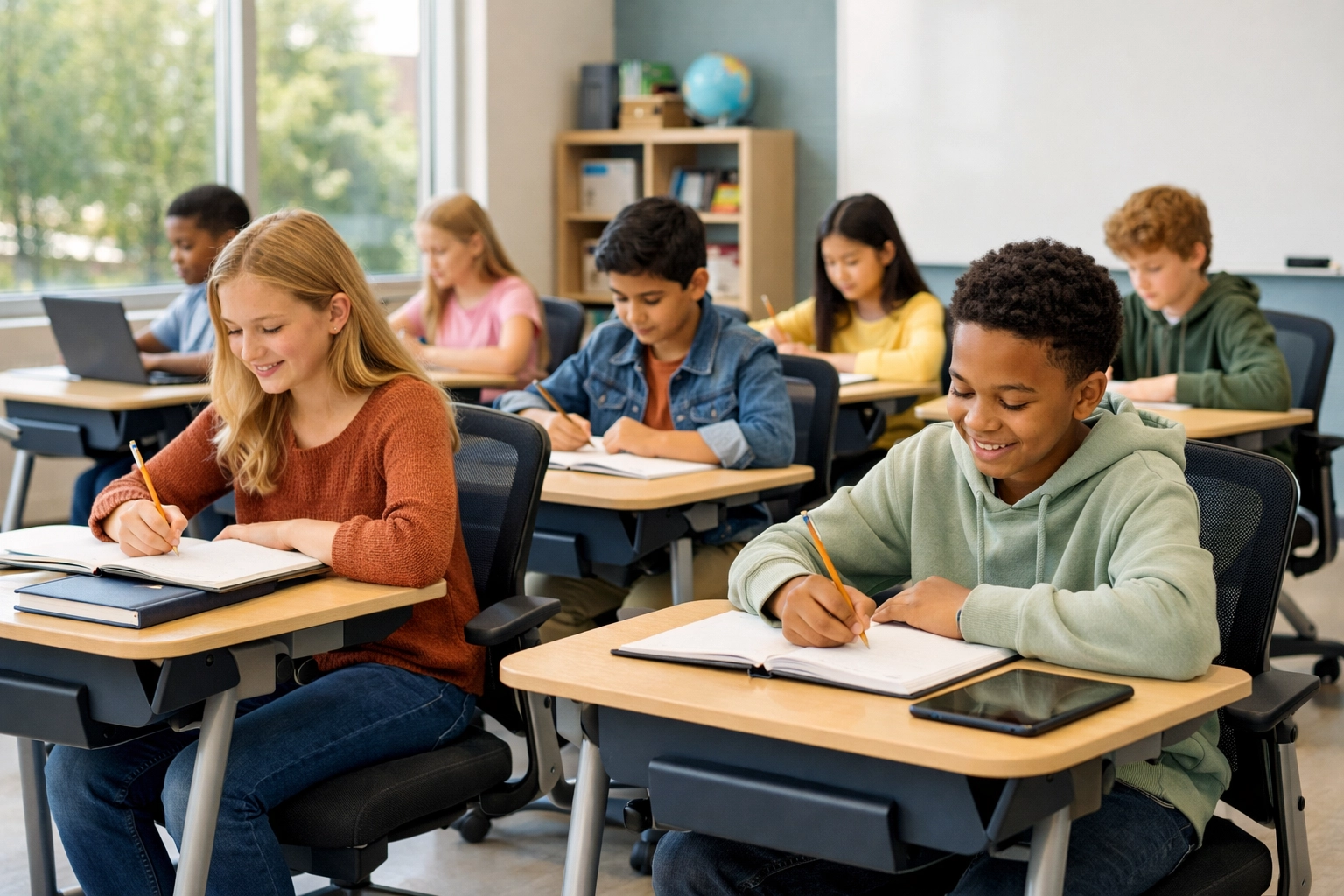
Caption: Ergonomic Classroom Furniture in a bright learning space—students using supportive classroom chairs (student chairs) and properly sized student desks for sustained focus.
5. Minimizing Fatigue with Targeted School Furniture (Classroom Furniture)
Fatigue is a sneaky focus-killer because it builds quietly, period by period. Targeted school furniture reduces strain throughout the day by matching classroom furniture to age range, body size, and real instructional routines—not by defaulting to one standard chair and one standard desk for everyone.
High-impact school furniture decisions often include:
- Right-sizing basics: classroom chairs and student desks selected by grade band (and, when needed, differentiated within a space)
- Surface choices that match instruction: tops that support both paper and devices without forcing awkward posture or cramped setups
- Comfort that lasts: durable materials that don’t create excessive heat, pressure build-up, or “hard edge” discomfort over long sitting blocks
When students feel better physically, they have more capacity for learning, problem-solving, and persistence—exactly the outcomes school furniture should be facilitating.
For added clarity, targeted school furniture is where Ergonomic Classroom Furniture becomes a system, not just a product list. Examples of “targeted” decisions that raise day-to-day performance include:
- Matching furniture to instructional style: seminar discussion, project work, and testing all place different demands on classroom furniture
- Planning for technology without awkward posture: the right height and surface depth helps laptops and tablets feel natural to use
- Reducing end-of-day fatigue: when chairs, desks, and layouts support the body, students typically have more energy left for final periods
- Extending ergonomics beyond classrooms: Ergonomic Classroom Furniture principles also apply to shared spaces like school cafeteria tables, where the right heights, edges, and seating support calmer, more comfortable transitions during lunch
6. Enhancing Interaction with Collaborative Classroom Furniture (School Furniture)
Collaboration is a lot harder when the room fights it, and “group work” becomes less effective when students are physically uncomfortable or stuck in awkward layouts. Collaborative classroom furniture is school furniture designed to make interaction feel natural—tables that group easily, mobile pieces, and layouts that support quick, low-friction transitions.
Collaborative classroom furniture can facilitate:
- Faster transitions: smoother shifts between direct instruction, partner work, and small groups
- Better communication: cleaner sightlines for discussion, presentation, and teacher support during circulation
- More inclusive participation: seating and table geometry that invites quieter students into the work instead of pushing them to the margins
When classroom furniture supports interaction, the environment starts functioning like an instructional tool—one that promotes engagement, accountability, and shared problem-solving.
In many spaces, collaborative classroom furniture is also where Ergonomic Classroom Furniture earns extra value, because group work often runs long—and the same planning mindset extends beyond classrooms into library furniture zones where students collaborate, read, and research. When students can collaborate without discomfort, schools commonly see:
- More sustained discussion (less shifting, fewer side conversations triggered by restlessness)
- Cleaner project workflows (shared surfaces and mobile layouts reduce wasted time)
- Better teacher circulation (fewer bottlenecks, easier check-ins, and quicker feedback)
- More consistent posture across settings when library furniture and classroom furniture share the same ergonomic standards
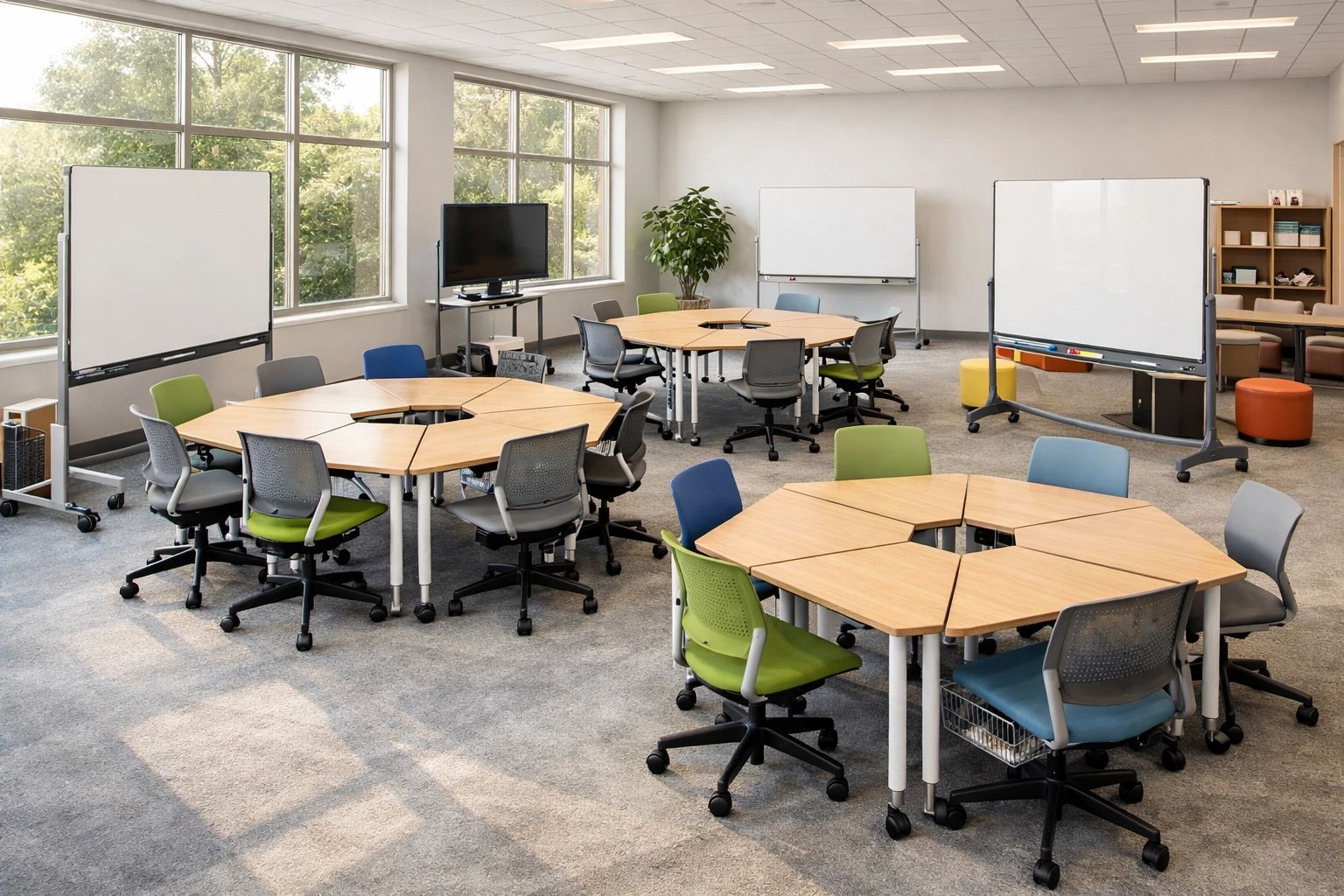
Caption: Collaborative classroom furniture with student desks and flexible classroom seating as part of Ergonomic Classroom Furniture—group-friendly school furniture that promotes interaction and smoother transitions.
7. Leveraging Expert Guidance from an EDS (Educational Design Specialist) for School Furniture
Even great products can miss the mark if they’re not paired with the right room plan, grade-level needs, and daily routines. That’s where an EDS (Educational Design Specialist) adds real value—bringing an experienced, practical lens to school furniture selection so classroom furniture choices support instruction instead of creating friction.
At School Furniture Headquarters, our EDS team works alongside schools to:
- Clarify needs and constraints: student populations, schedules, instructional models, space limits, and budget realities
- Match products to outcomes: recommending classroom furniture—student desks, classroom chairs, flexible classroom seating, and collaborative classroom furniture—that supports comfort, focus, and effective transitions
- Keep the project moving: coordinating details so the final space feels intentional, cohesive, and easy to use from day one
And just as importantly, our EDS team helps keep Ergonomic Classroom Furniture decisions grounded in what will hold up and perform: right sizing, smart layouts, durable materials, and furniture selections that support how learning actually happens in the room.
Let’s embark on a journey to create a classroom where comfort promotes focus and collaboration feels natural. Visit School Furniture Headquarters to explore options and connect with an Educational Design Specialist who can help build a smarter, more supportive learning environment.
Frequently Asked Questions (Flexible Classroom Seating, Ergonomic Classroom Furniture, and Collaborative Classroom Furniture)
What is flexible classroom seating, and does it actually improve focus?
Flexible classroom seating refers to providing students with a mix of seating options that allow controlled movement and choice—such as stools, rocking/perching seats, and mobile chairs. When implemented thoughtfully, flexible classroom seating can reduce off-task fidgeting, support self-regulation, and make it easier for students to maintain attention during longer blocks.
What should we prioritize first when investing in ergonomic classroom furniture?
Start with the pieces students use the most: ergonomic classroom furniture typically delivers the fastest impact when you right-size student desks and classroom chairs, then add adjustability and a few movement-friendly options. The priority is consistent comfort—because less discomfort usually means fewer distractions and stronger time-on-task.
How does collaborative classroom furniture support group work without creating chaos?
Collaborative classroom furniture supports group work by making transitions and interaction simpler—tables that reconfigure quickly, seating that stays comfortable in multiple orientations, and layouts that maintain sightlines. When collaborative classroom furniture is planned as part of the overall classroom furniture strategy, group work becomes more efficient, more inclusive, and easier to manage.
Conclusion
Ergonomic Classroom Furniture is a high-leverage investment for administrators and educators because it supports focus at scale: better posture at student desks, more comfortable classroom chairs (student chairs), healthier movement through flexible classroom seating, and stronger peer-to-peer learning through collaborative classroom furniture. When these decisions are aligned across classrooms and shared spaces—like library furniture zones and even school cafeteria tables—schools often see fewer distractions, smoother transitions, and more consistent engagement throughout the day.
At School Furniture Headquarters, our EDS team helps turn that goal into a practical plan—right-sizing school furniture, selecting durable classroom furniture, and building layouts that promote comfort, collaboration, and long-term adaptability.